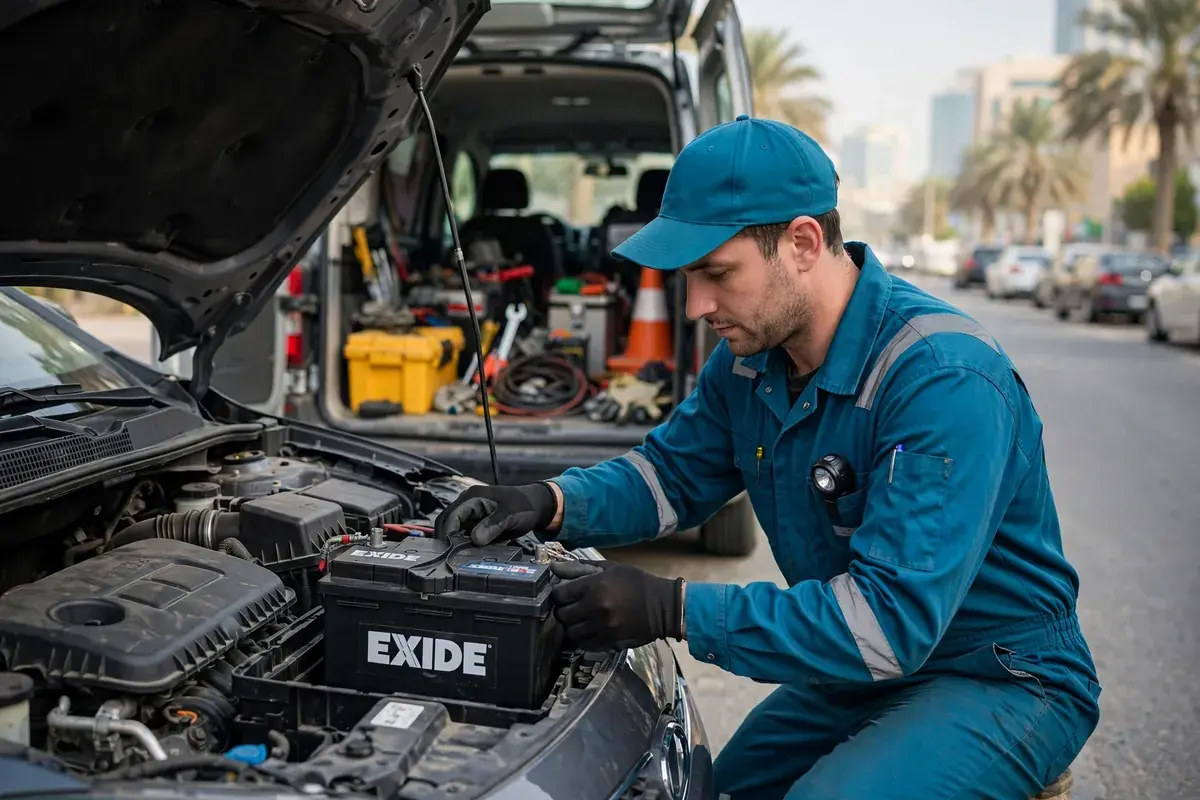
Likely battery
- No start after sitting overnight
- Yes, especially with slow cranking
- Starts on a jump, then dies soon after
- Unlikely
- Battery lamp lit while driving
- Rarely
- Lights dim at idle, brighten with revs
- Unlikely
- Swollen case or leaking acid
- Yes
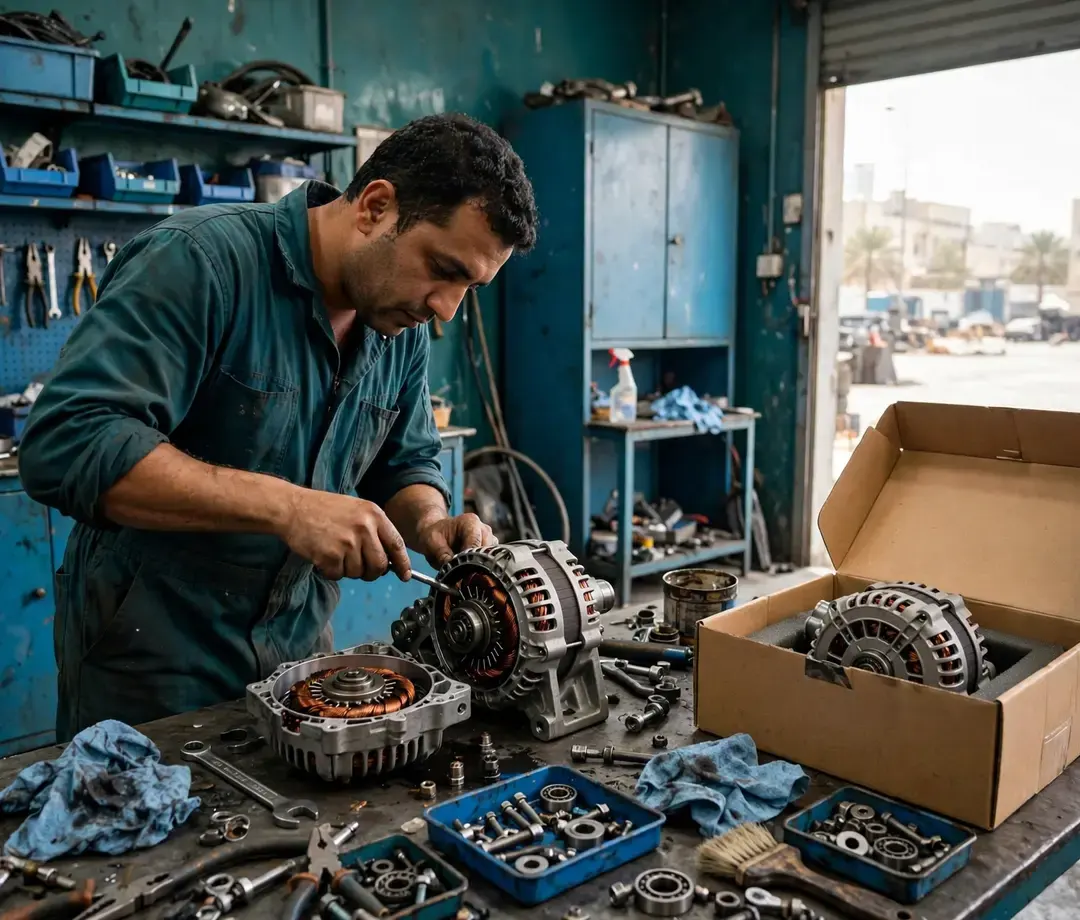
An alternator usually gives notice before it quits completely. Watch for any of the following.
One symptom on its own proves little. Measuring the charging output settles it in minutes.
With the engine running, the alternator generates the electricity for lights, cooling fans, screens and engine electronics, and it tops the battery back up after every start. The battery mainly handles starting and short spells with the engine off.
Older cars used a dynamo, a direct current generator that produced little at idle. Alternators took over from the 1960s as diode rectifiers became affordable and cars needed more power. Plenty of drivers and garages here still say dynamo, and we treat both words as the same request.
On many newer models the engine computer decides how hard the alternator charges, so careful testing matters more than ever.
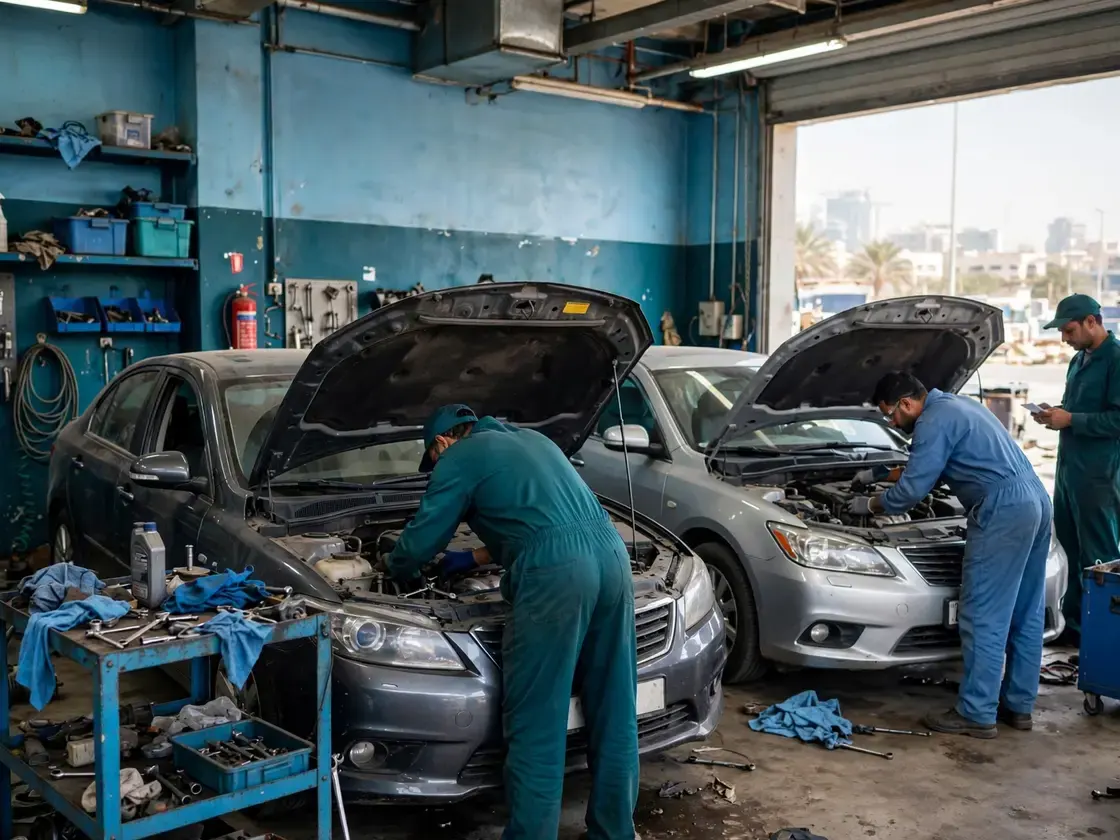
Symptoms overlap, but when the trouble appears tells you a lot.
Treat this as a guide, not a verdict. Measuring output with the engine idling confirms which part is to blame.
When charging stops, the car runs purely on stored energy until the battery is empty. Fit a new one without fixing the cause and it drains in exactly the same way, often within days.
The reverse also happens. A regulator that lets voltage climb too high can cook a perfectly good battery, which is why both parts deserve testing together before anyone spends money on either.
Think of it as a countdown. The engine is now living on whatever charge the battery holds, so switch off non-essential loads like the air conditioning and rear demister and make for somewhere safe to stop. If a squeal or a climbing temperature gauge comes with the lamp, pull over sooner: on many engines the same belt also drives the water pump.
The alternator is turned by the accessory belt, usually at two to three times crankshaft speed. If that belt is glazed, cracked, loose or slipping, output drops even when the alternator itself is healthy.
A squeal on start-up, shiny sides on the belt or frayed ribs all justify a closer look. Because the same belt often powers the air conditioning compressor too, a snapped one can leave you with more than a charging problem.
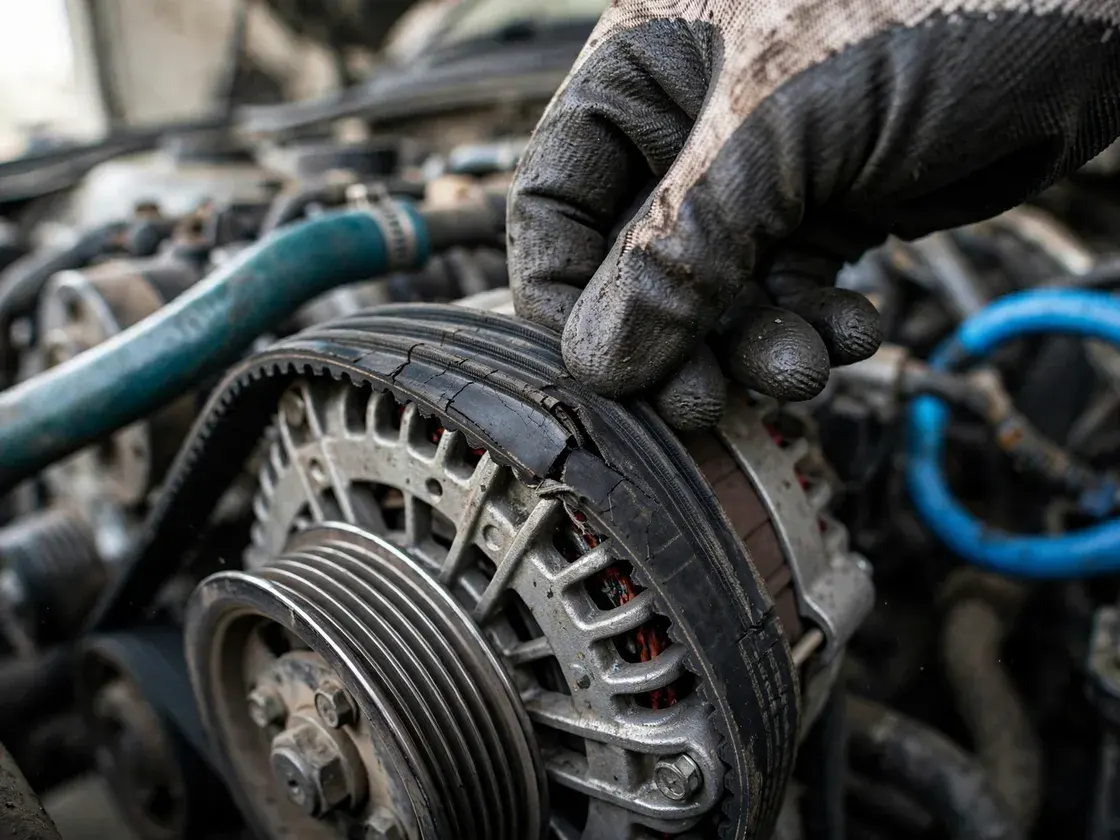
An alternator is a handful of simple parts working hard in a very hot engine bay. These are the usual culprits.
100%
Live scan · Charging output
Charging
Now checking: Rectifier diodes
They convert alternating current into direct current. A failed one cuts output or lets AC ripple upset sensitive electronics.
It controls the rotor's magnetic field to keep output steady. When it fails, the battery is either starved or pushed too hard.
They feed current to the spinning rotor and wear down gradually until contact turns patchy.
Worn bearings make a growl that rises with engine speed and can eventually seize altogether.
A corroded earth or loose main lead can mimic a dead alternator, so connections are checked before parts are condemned.
A worn pulley or weak tensioner lets the belt slip, most noticeably when the compressor kicks in.
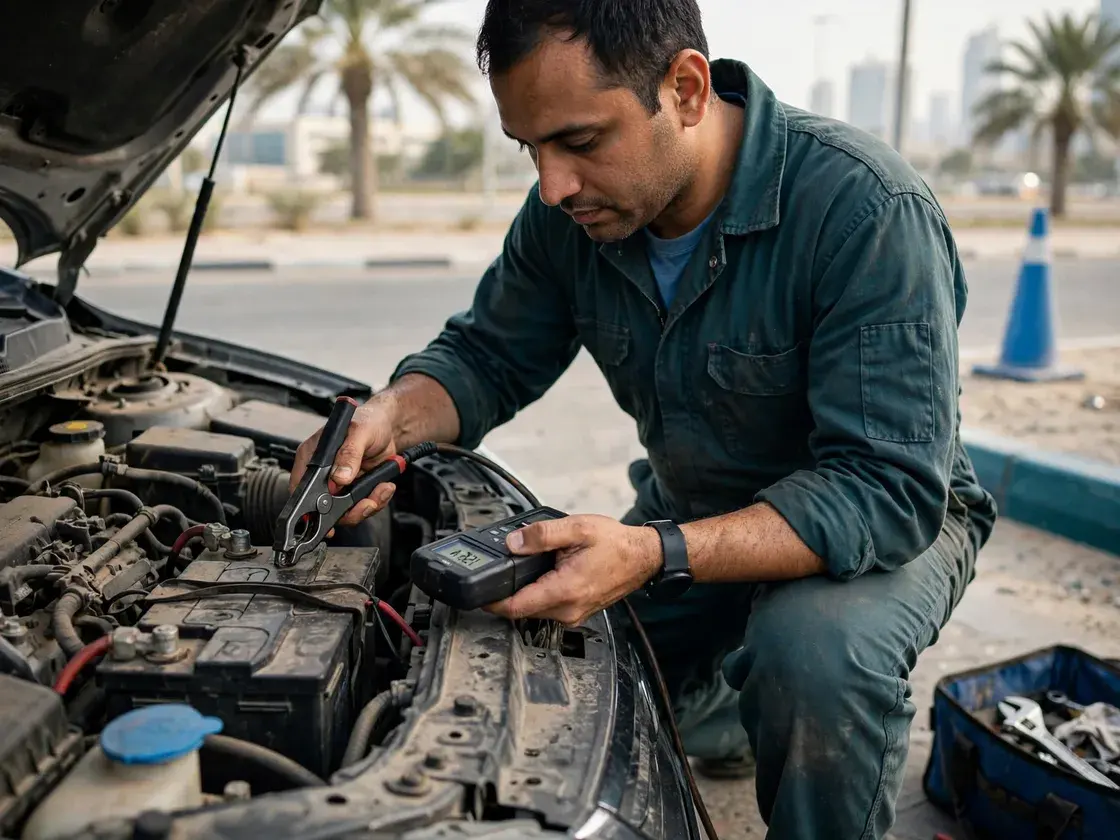
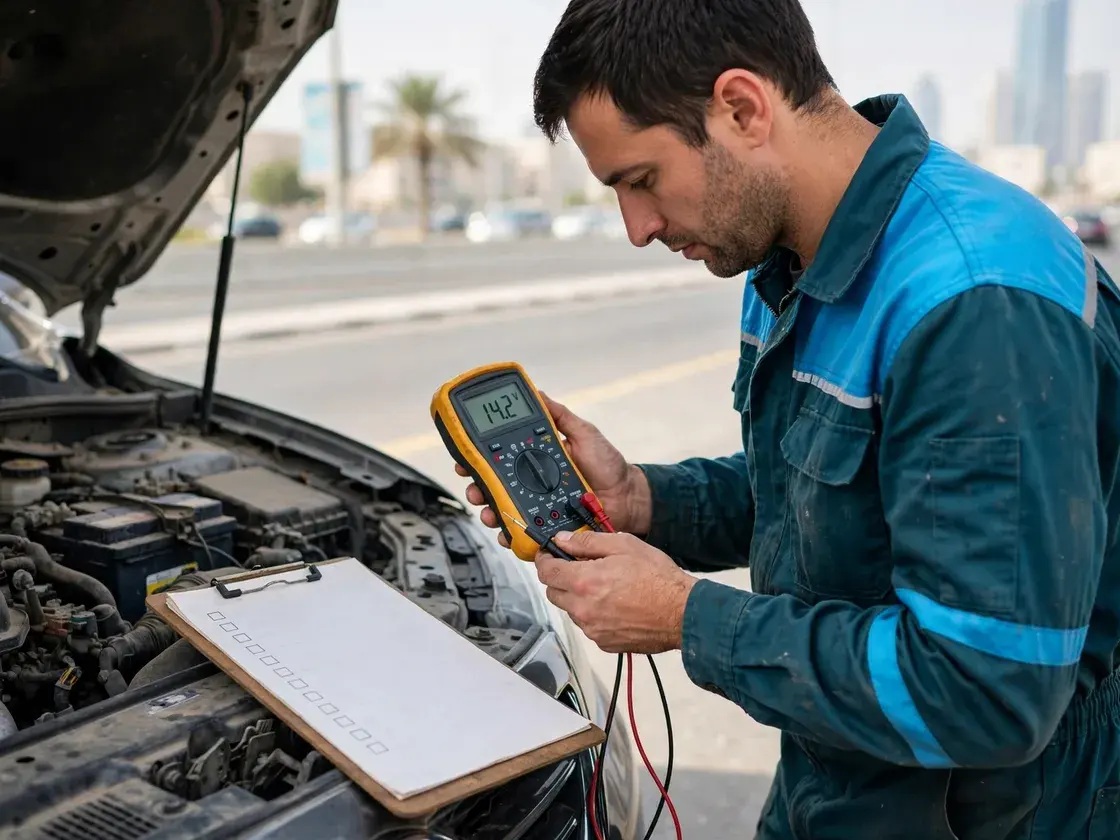
With the engine running, AAA says a healthy charging system shows roughly 13 to 14.5 volts across the battery. Readings well below that, or ones that sag as lights and fans switch on, suggest undercharging, while a figure creeping above the range points towards the regulator.
Belt condition, connections and the battery itself are looked at as well, so the repair targets the real fault. Diagnosis starts from AED 50, most jobs are done in 30 to 60 minutes, and the service runs 24/7 across Dubai.
Only briefly. The car runs on battery power alone, and once that is used up the engine and electrics can shut down mid-journey. Having it checked before setting off is far safer.
Send us your location. We measure the charging output beside your car and, in most cases, complete the repair before you need a tow, 24/7.