Flooded (standard)
- Construction
- Plates sit in liquid acid
- Typical vehicle
- Simpler cars without start-stop
- Cycling ability
- Lowest
- Spill resistance
- Can leak if cracked
- Relative cost
- Lowest

Two or more of these together justify a quick test.
100%
Live scan · Battery health
Healthy
Now checking: Lazy cranking
The engine turns over slowly with a dragging sound instead of firing within a second or two.
Needing a jump more than once in a few weeks shows the battery is losing its grip on charge, or something is draining it.
A head unit that reboots on start-up, sluggish windows or a clock that keeps resetting can trace back to sagging voltage.
A swollen case, cracks, leaks or chalky deposits on the clamps point to internal damage or a poor connection.
A rotten egg odour under the bonnet can mean the battery is overheating or venting, so get it looked at promptly.
Midtronics says most car batteries are not designed to last much beyond three to five years, and constant heat rarely helps.
Heat speeds up every chemical reaction inside a lead-acid battery, including the ones that wear it out. Varta explains that reactivity roughly doubles with each 10 degree rise, and the main casualty is the lead grid that carries current and holds the active material.
The car keeps starting until the weakened grid cannot deliver enough current, so a battery that seemed healthy last week can give up overnight. A conductance tester reads state of health rather than plain voltage, so it can flag the decline early.
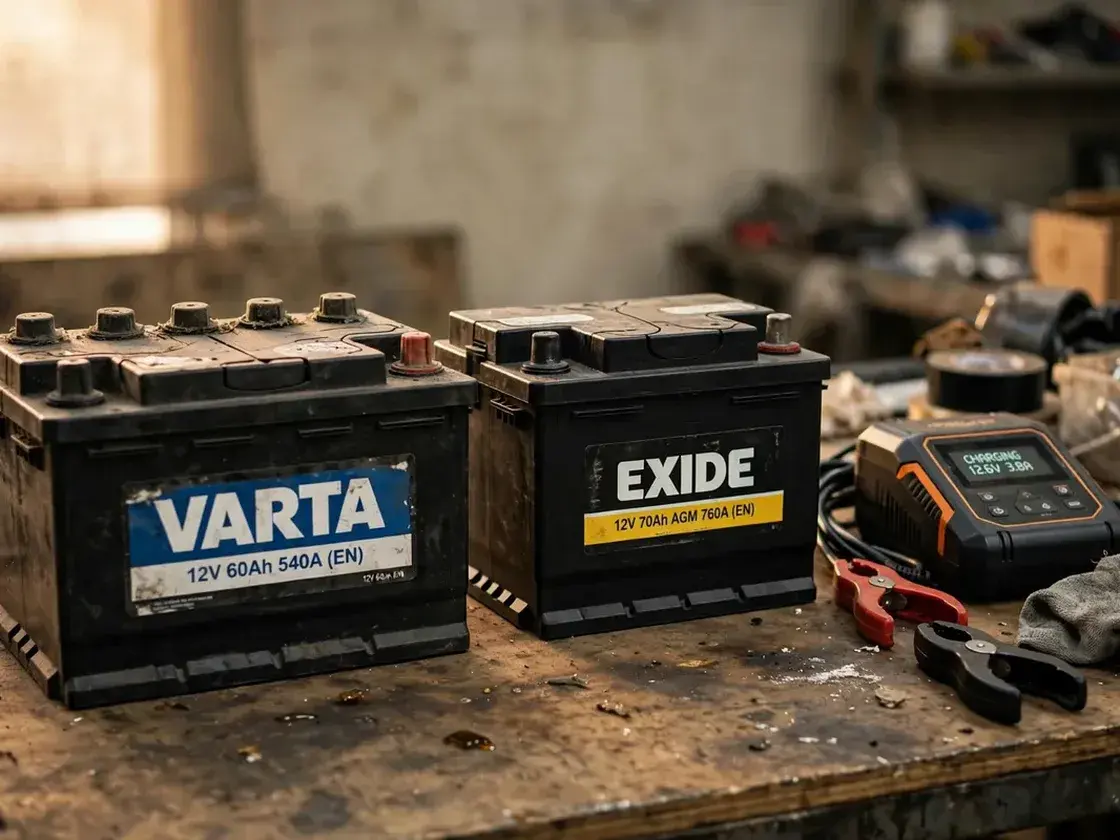
Three lead-acid designs dominate. Whatever your car left the factory with is the starting point for its replacement.
Varta advises replacing a start-stop battery only with the same technology. Stepping up from EFB to AGM is fine, but a standard battery in place of either fails quickly.
Many recent cars monitor the battery through a sensor and tailor charging to its age and capacity. Varta lists Audi, BMW, Jaguar, Jeep, Land Rover, Mazda, Mini, Seat, Skoda and Volkswagen among the makes that need a new unit registered with a diagnostic tool, while some Ford, Hyundai and Kia models vary by version.
Skip that step and the car may keep treating the fresh battery like the tired one, which can limit start-stop and comfort features. Mention the make and year when you book so registration is planned into the visit. Where the car allows, a backup supply also keeps radio presets and window memory while the terminals are off.
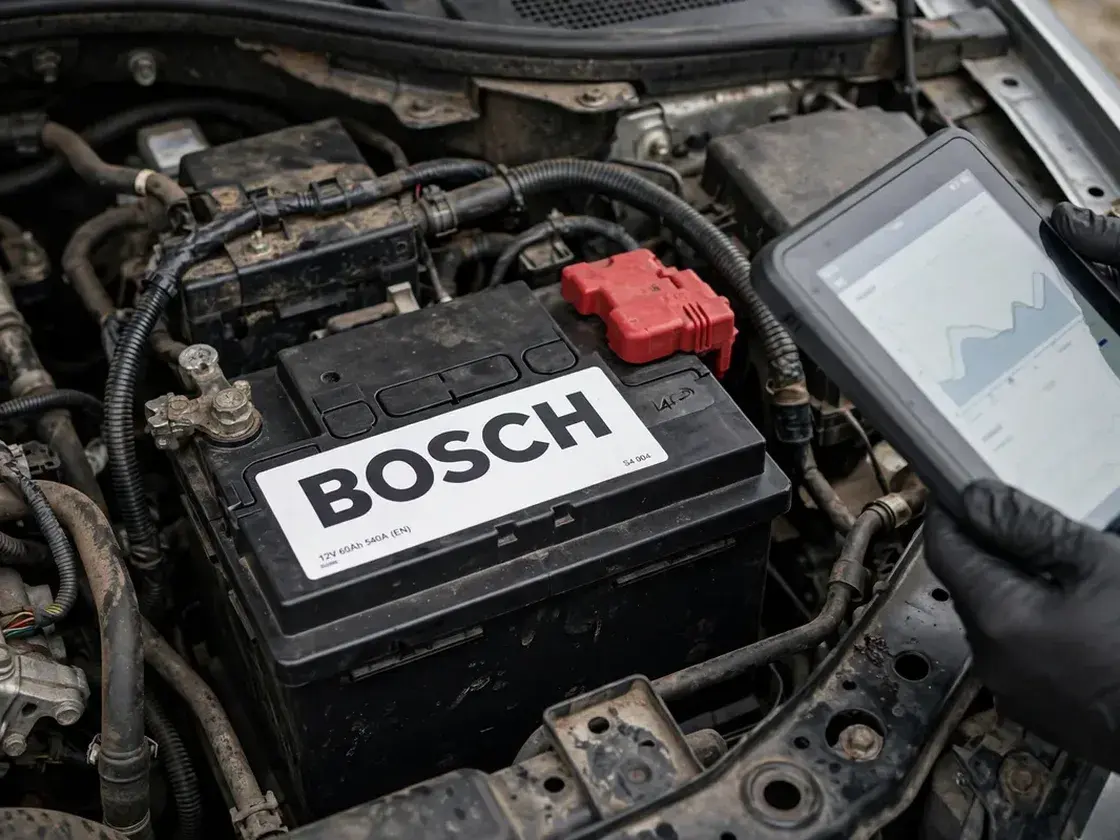
Unclip the black negative lead before the red positive one, and reverse that order when refitting. With the earth side already free, a spanner that brushes the bodywork while you loosen the positive post cannot cause a short. Wear gloves and eye protection, keep flames away, and leave a swollen or leaking battery to a professional.
Amp hours (Ah) describe capacity, meaning how much current the battery can supply over time with the engine off. Cold cranking amps (CCA) describe a short burst of starting power, measured at minus 18 degrees for 30 seconds while voltage holds at 7.2 or above. Match or exceed the carmaker's figure for both.
Also check the case size, the side the positive post sits on, the technology and the manufacturing date, since a long-stored unit may have lost charge.
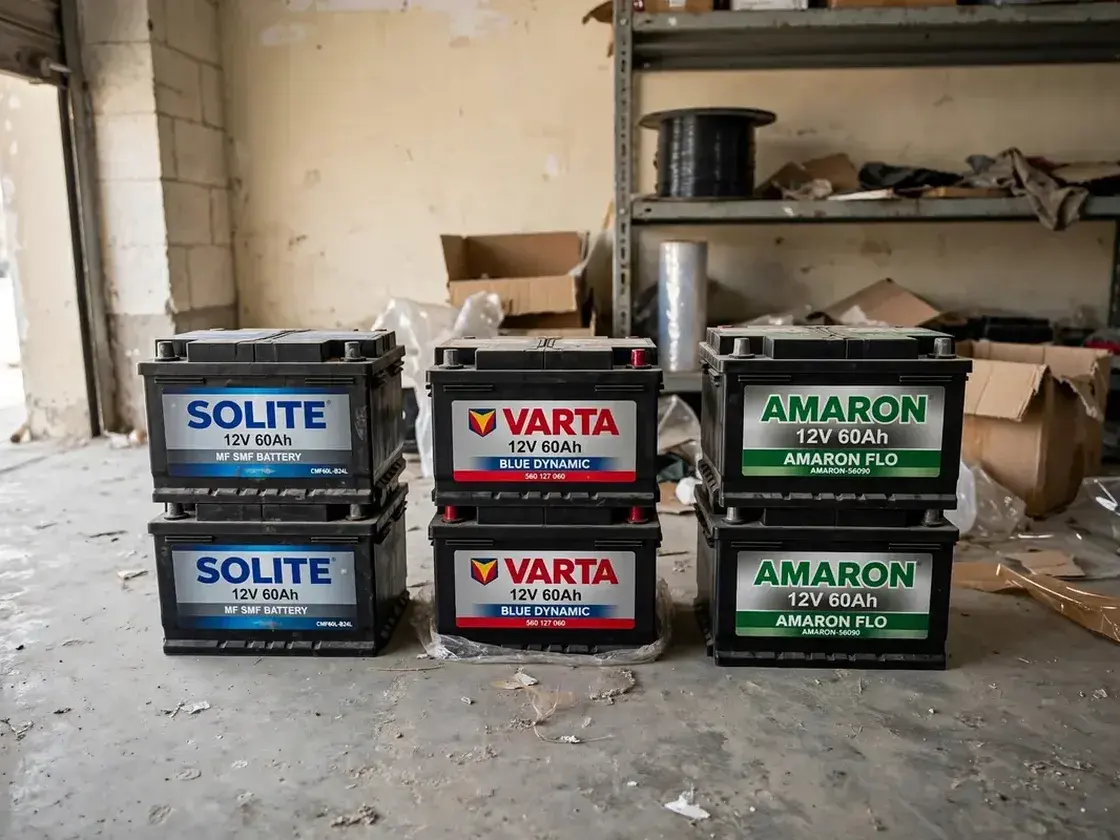
Drop a pin and tell us the make, model and year so a matching battery comes along.
Your existing battery gets a free health test first. If a recharge or a terminal clean is all it needs, you will hear that.
The old unit comes out and the new one is clamped down securely, with registration done for models that expect it.
We fire the engine, confirm everything powers up and explain the warranty. Most swaps take around 20 to 30 minutes.
Spent lead-acid batteries count as hazardous waste in the UAE, and Dubai Municipality has warned that collecting or disposing of them without a permit from its Environment Department can lead to penalties or licence cancellation.
Acid poured onto sand or lead left in a skip harms soil and water for years, so never put one out with household rubbish. Pass it to a permitted collector, such as a dealership or licensed battery shop, so the lead and plastic can be reclaimed.
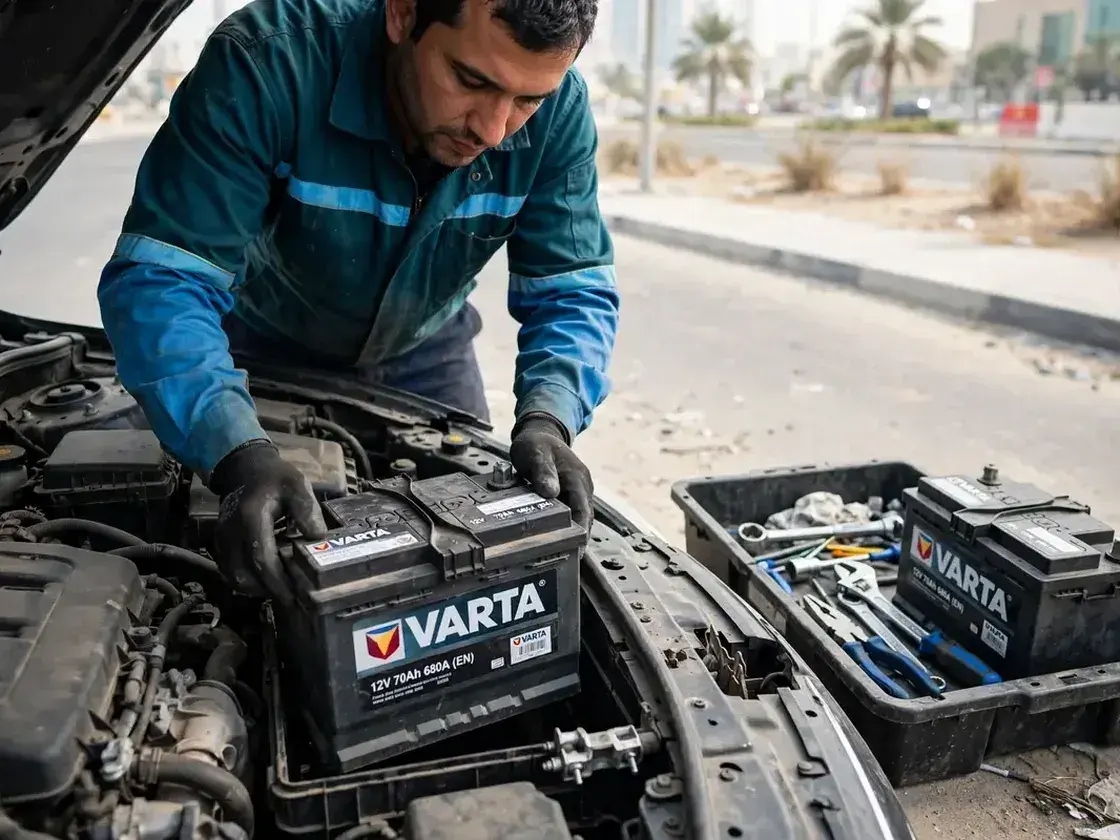
Industry guidance puts most batteries at roughly three to five years, but sustained heat speeds up internal corrosion, so many here sit at the lower end. A yearly health test is the surest way to judge yours.
Send your location and what you drive. A technician brings a tested, matching battery and fits it on the spot, any hour of the day.