Vehicle recovery

Car Recovery in Dubai for Crashes, Sand and Tight Spots

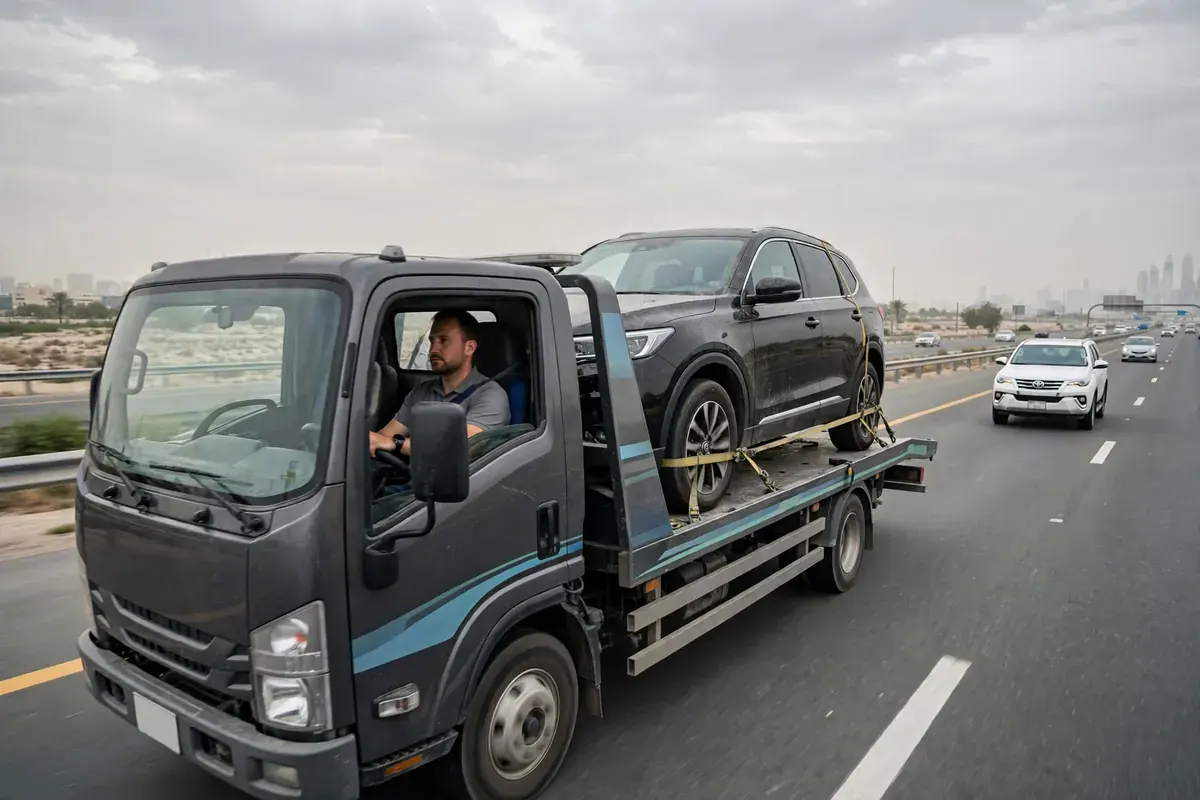
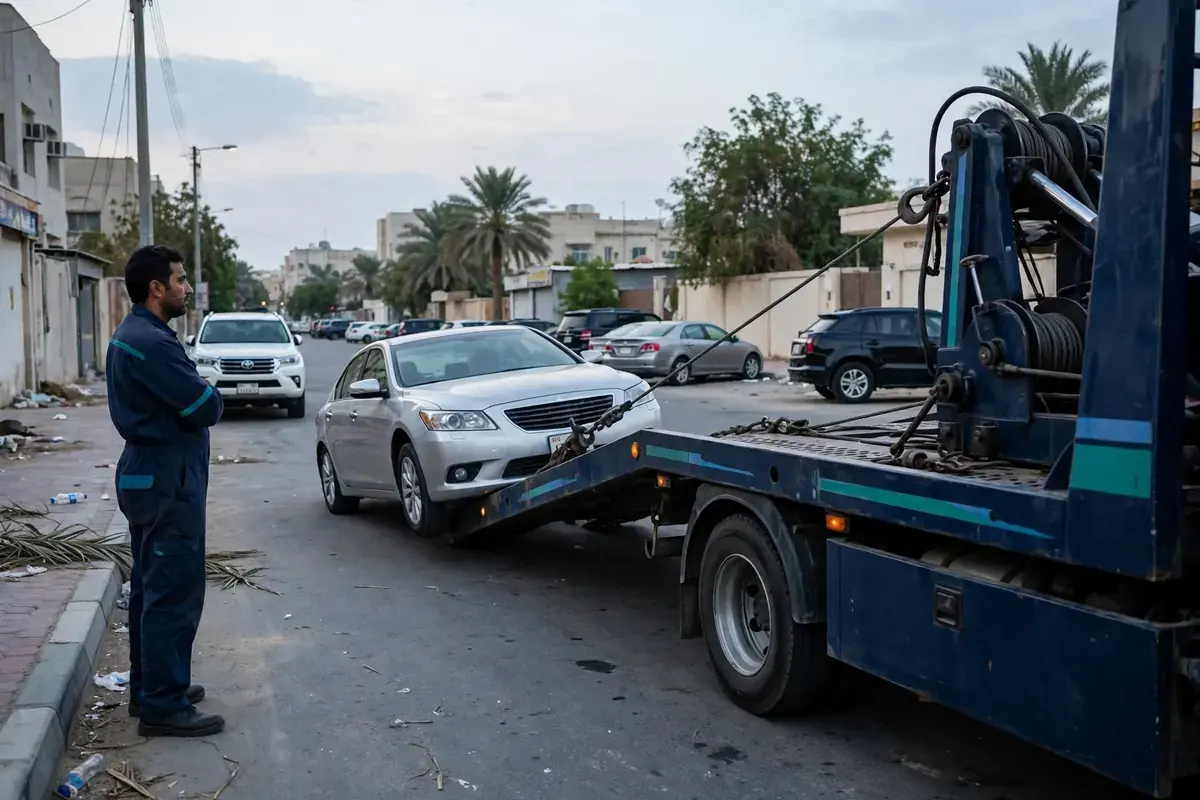
Saloon car being winched onto a recovery truck on a Dubai side road at dusk
Live call-outCar Recovery Dubai
1
Step 1 of 5Check for injuries
Typical arrival
Under 45 min
Vehicles
Every size
Pricing
Quoted upfront
Straight after a collision

What to Do at an Accident Scene in Dubai

Recovery comes after people are safe and the police side is handled. Work through these in order.

  1. 01

    Check for injuries

    If anyone is hurt or the crash is serious, call 999 and leave the vehicles where they are. Police and an ambulance are dispatched together.

  2. 02

    Clear the lane after a minor bump

    When nobody is injured and the cars can still move, Dubai Police ask drivers to pull over to the side so traffic is not blocked.

  3. 03

    Record and exchange details

    Photograph both vehicles from all four sides with the plates visible, and swap driving licence, registration and insurance information.

  4. 04

    Report it officially

    Small, injury-free accidents can be logged through the Dubai Police app or DubaiNow. If the drivers cannot agree who was at fault, call 999 instead.

  5. 05

    Arrange the recovery

    Once the scene is safe and reported, a recovery truck can lift a car that should not be driven and take it to your chosen garage.

No Police Report, No Repair

UAE traffic law does not allow a workshop to repair a vehicle showing signs of an accident without official permission, so garages will ask to see the police report before any panel is touched. Insurers such as GIG Gulf also state that a report is needed to open a claim. Keep a copy with you when the car is delivered.

Know which case you are in

Minor Bump or Serious Crash?

Minor collision

Injuries
None
Moving the cars
Move to the shoulder if they still drive safely
Who to contact
Report through the app; 999 only if fault is disputed
Official record
Digital report sent to you for the insurer
When recovery helps
If the car is leaking, has a damaged wheel or will not start

Serious collision

Injuries
Anyone hurt, even slightly
Moving the cars
Leave them in place for the police
Who to contact
999 straight away
Official record
Report issued after police attend the scene
When recovery helps
After police release the vehicle from the scene
Sand and desert

Bogged Down in Soft Sand

Once a car digs in, more throttle only buries the tyres deeper. Stop, get out and look at what the wheels are resting on. Dubai Police advise adjusting tyre pressures before driving on sand and engaging four-wheel drive where the car has it; lowering pressure spreads the tyre and helps it float rather than cut in.

Scoop sand away from in front of each wheel, push recovery boards under the tyres and ease forward gently. If the car is resting on its chassis, stop before the clutch or gearbox overheats and let a recovery crew pull it back to firm ground.

Typical call-outs

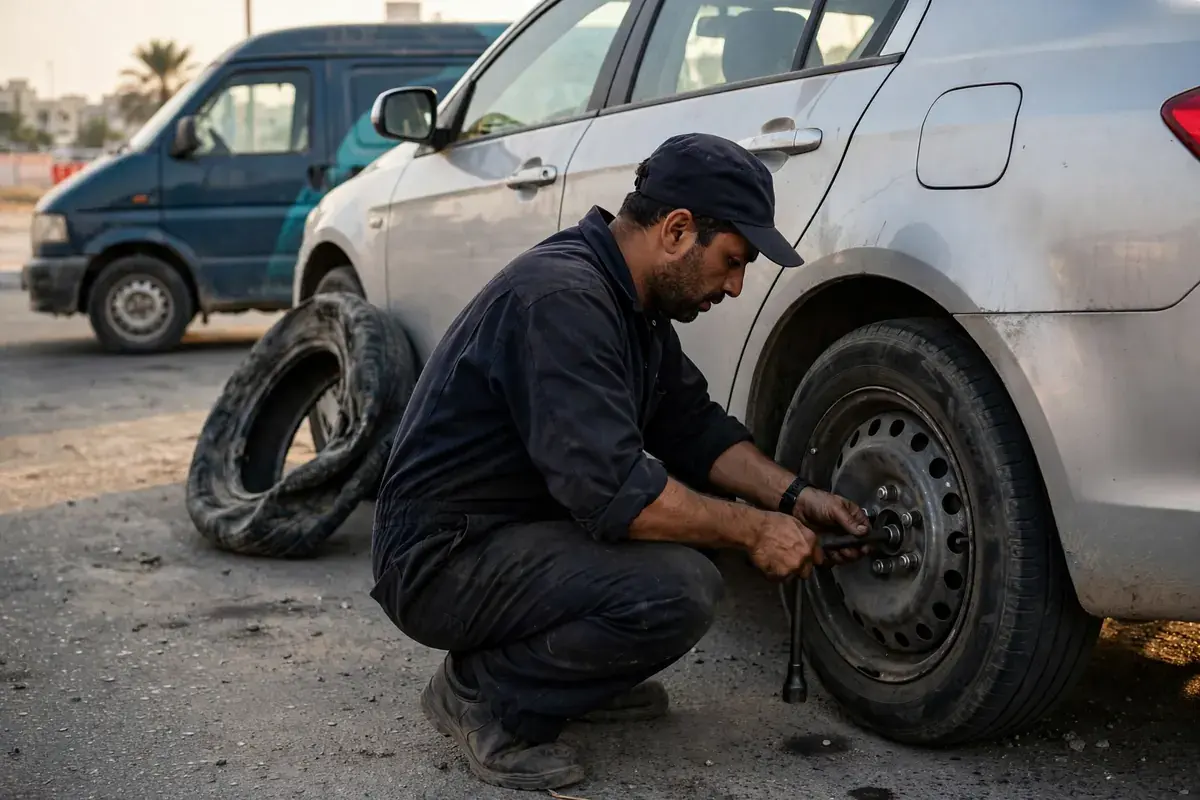
Where Cars End Up Needing Recovery

0%

Live scan

Check 1 of 5

Now checking: Slid into a ditch

  1. Slid into a ditch

    Checking

    A wheel off the edge of the hard shoulder or a drainage channel can leave the car tilted and unable to climb out under its own power.

  2. Beached on a kerb

    Queued

    Ride up a high kerb and the underside may rest on concrete with the driven wheels barely touching.

  3. Wheels locked by damage

    Queued

    A bent suspension arm or a jammed brake stops a wheel turning, so the car must be skated or lifted rather than rolled.

  4. Dead in a live lane

    Queued

    Engine failure on a busy road needs a quick, controlled pull to safety before any repair is attempted.

  5. Heavy or commercial vehicles

    Queued

    Pickups, vans and large 4x4s need equipment rated for their weight, whatever time of day they break down.

Winching and straps

Safety Rules for Any Pull

Whether a friend is helping or a professional crew is on site, these basics prevent injuries.

Tyre maker BFGoodrich gives the same guidance in its off-road recovery advice.

  • Attach straps only to rated recovery points, never to a tow ball or bumper hitch, which can break off under load.
  • Keep everyone not involved further away than the full length of the winch cable.
  • Do not step over a strap or rope while it is connected.
  • Lay a dampener over a winch line so it drops rather than whips if it snaps.
  • Let one person give signals so the driver and operator are never guessing.
Breakdowns

When the Car Simply Will Not Move

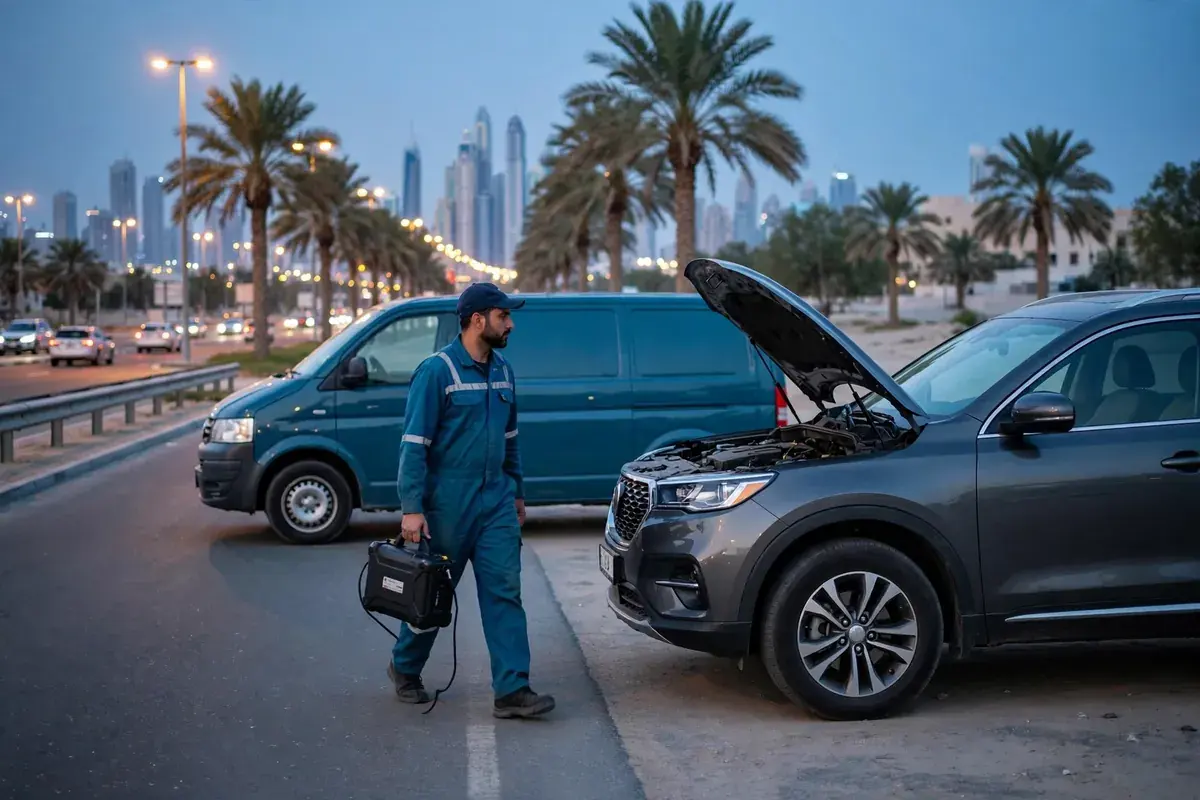
Not every recovery follows a crash. A seized engine, a snapped driveshaft or a gearbox stuck in park can strand a car as firmly as sand, and a car that cannot roll has to go onto the truck on skates.

Tell the dispatcher whether the wheels turn, whether the steering is free and whether the car sits on a slope. Those three answers decide what equipment comes out.

Where the car goes next

From the Roadside to the Workshop

Most recovered cars go to a garage, an agency service centre or a workshop approved by the insurer. If the repair will be claimed, ask your insurer where they want the car delivered before it is loaded, as moving it twice adds cost.

The price is agreed before the job starts, so you know the bill whether the car travels a few kilometres or right across the emirate.

FAQs

Car Recovery Dubai: Common Questions

  • Check whether anyone is injured. If so, call 999 and do not move the vehicles. If it is minor and the cars can be driven, move them out of traffic and report it through the Dubai Police app or DubaiNow.

Stuck, damaged or stranded?

Share a pin and a quick description of where the car is sitting. You will get a price before the crew sets off.