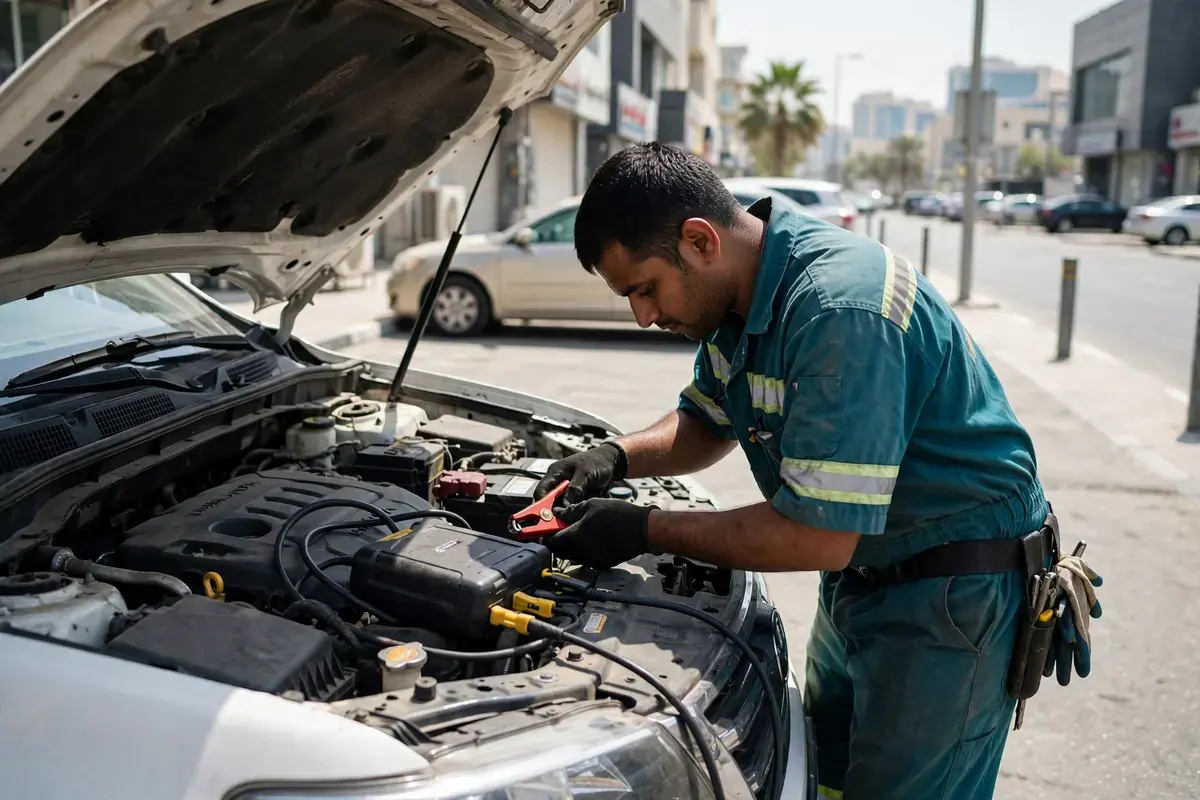
Spare wheel fitting

Flat Tyre Change in Dubai, With the Spare Fitted Where You Stopped

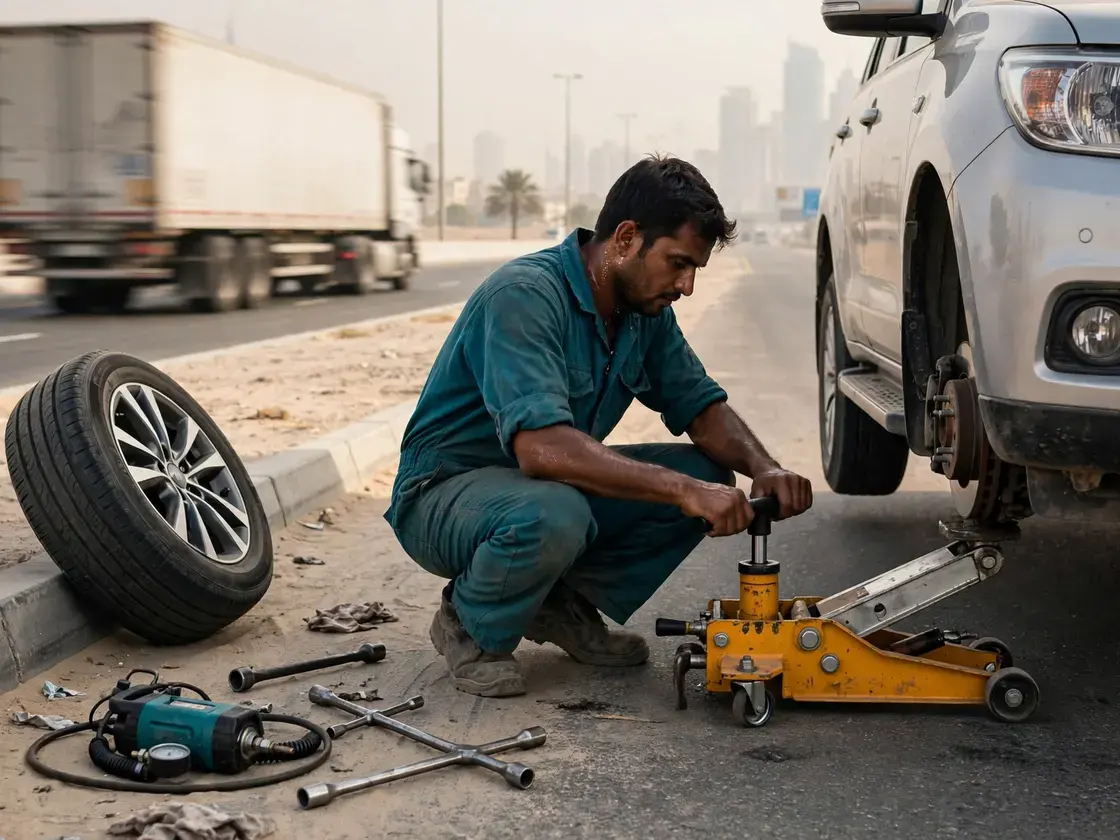
Mobile technician tightening the nuts on a freshly fitted spare wheel at a Dubai roadside
Live call-outFlat Tyre Replacement
1
Step 1 of 6Get clear of moving traffic
Starts from
AED 99
On site in
About 30 min
Coverage
24/7, citywide
The job explained

What a Roadside Wheel Swap Actually Involves

Changing a wheel sounds simple until you are doing it on a hot shoulder with lorries passing. The car has to be held still, lifted at a point strong enough to carry it, and lowered with every nut seated evenly. Miss one of those and a routine tyre swap can end in an injury or a wheel working loose.

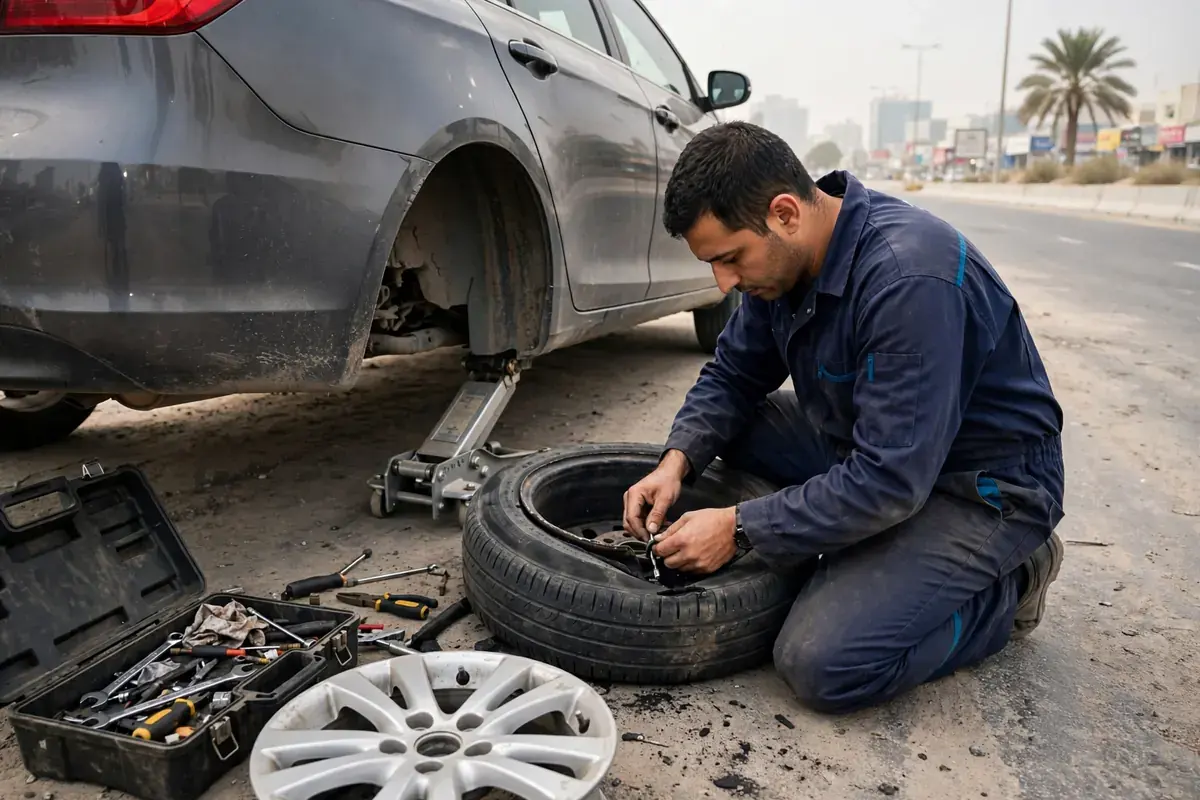
The technician brings a proper jack, wrench and inflator, so you are not relying on the small kit under the boot floor. Your spare goes on, its pressure is set, and you leave knowing how far and how fast that particular spare lets you drive.

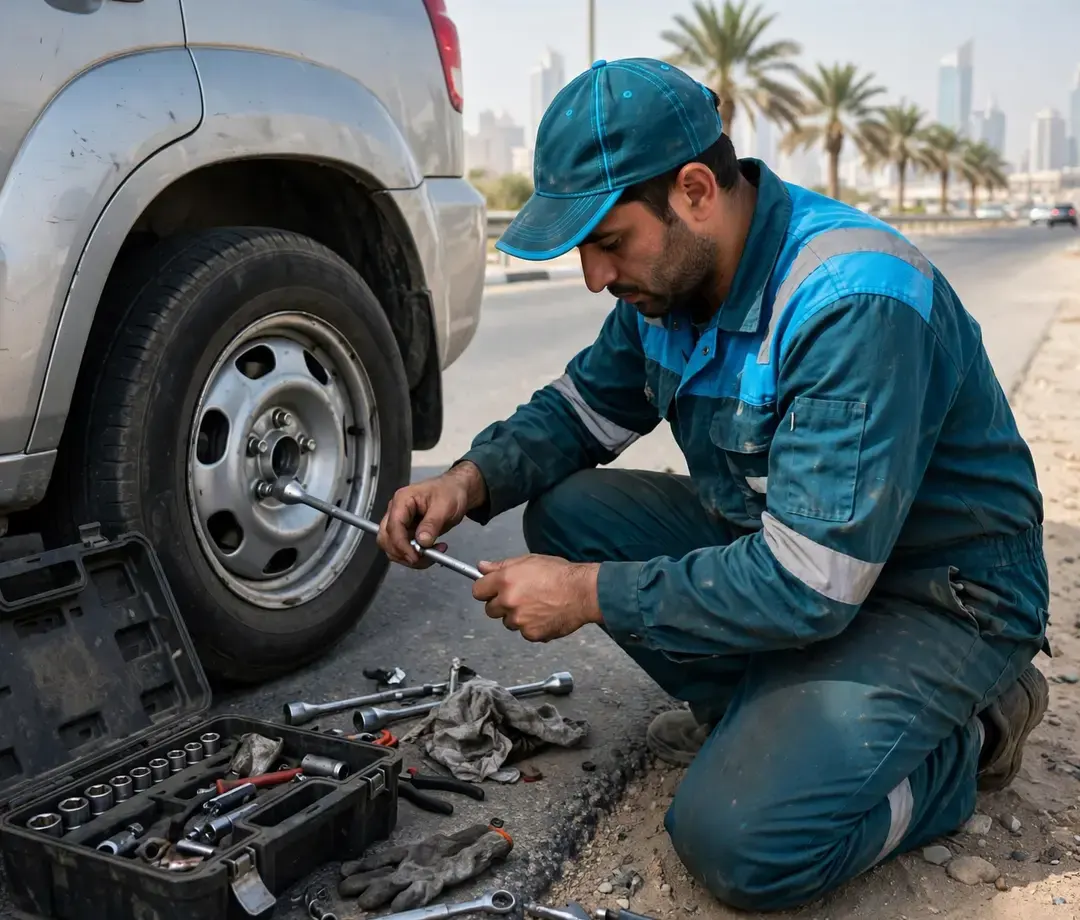
Technician using a trolley jack at the jacking point with the spare wheel ready
Know your spare

Spare Wheel Types and How Far Each Will Take You

Check the boot floor before you need it, because the type of backup decides what happens after a puncture.

What it is

Full-size spare
A wheel and tyre matching the other four
Space saver
A narrow temporary wheel with about 3 mm of tread when new
Run-flat tyres
Stiffened sidewalls that carry the car after air is lost
Sealant and compressor kit
A bottle of sealant plus a 12V pump, no wheel at all

Typical limits

Full-size spare
Normal driving once its pressure is correct and it is in date
Space saver
Usually 50 mph (80 km/h); the label on the wheel is the final word
Run-flat tyres
Bridgestone quotes up to 80 km at up to 80 km/h; other makers differ
Sealant and compressor kit
Continental's kit covers tread holes up to 6 mm, then 80 km/h for 200 km

What comes next

Full-size spare
Repair or replace the damaged tyre so you have a backup again
Space saver
Strictly a ride to the nearest fitter, not a wheel to keep
Run-flat tyres
Have the tyre inspected; many cannot be repaired
Sealant and compressor kit
No help for sidewall cuts or a tyre off its rim

Figures are examples from tyre maker and motoring body guidance. Your owner's handbook and any sticker on the spare take priority.

Step by step

How the Spare Goes On Safely

  1. 01

    Get clear of moving traffic

    A car park, service road or wide shoulder beats a live lane. Hazard lights go on and passengers wait behind a barrier.

  2. 02

    Stop the car from moving

    Handbrake on, gearbox in park or gear, and a chock against the wheel diagonally opposite the flat.

  3. 03

    Crack the nuts before lifting

    Each nut is eased while the tyre still grips the ground so the wheel cannot spin. A locking nut needs its key here.

  4. 04

    Lift at the proper jacking point

    The jack sits on the reinforced point shown in the handbook, and nobody reaches under a car held only by a jack.

  5. 05

    Fit, lower and tighten

    Nuts go on finger tight, the car comes down, and final tightening follows a crisscross order so the wheel seats evenly.

  6. 06

    Set pressure and recheck

    The spare is inflated to the placard or label figure. Motoring clubs suggest rechecking the nuts after the first 5 to 10 km.

While you wait, stay out of the car

UAE breakdown advice is to switch on hazard lights, leave by the door away from traffic and stand well back, ideally behind a guardrail. Place a warning triangle only if you can do so without stepping into a lane, and never try to lift the car yourself on a busy road.

Worth mentioning when you book

Things That Can Slow a Tyre Change

0%

Live scan

Check 1 of 4

Now checking: Locking wheel nuts

  1. Locking wheel nuts

    Checking

    One nut per wheel needs a keyed adaptor, usually kept in the glovebox or with the jack. Without it the wheel stays put.

  2. No spare in the boot

    Queued

    Many newer cars carry only a sealant kit or run-flats. A tread puncture may still be fixable where you are.

  3. A spare that is flat or old

    Queued

    Spares lose air in storage, and rubber ages from the day it is made, so an untouched spare can still be past its safe life.

  4. Kerb or pothole damage

    Queued

    A hard hit can bend the rim as well as cut the tyre. The spare still goes on, but the wheel needs checking before reuse.

After the swap

What Happens to the Damaged Tyre

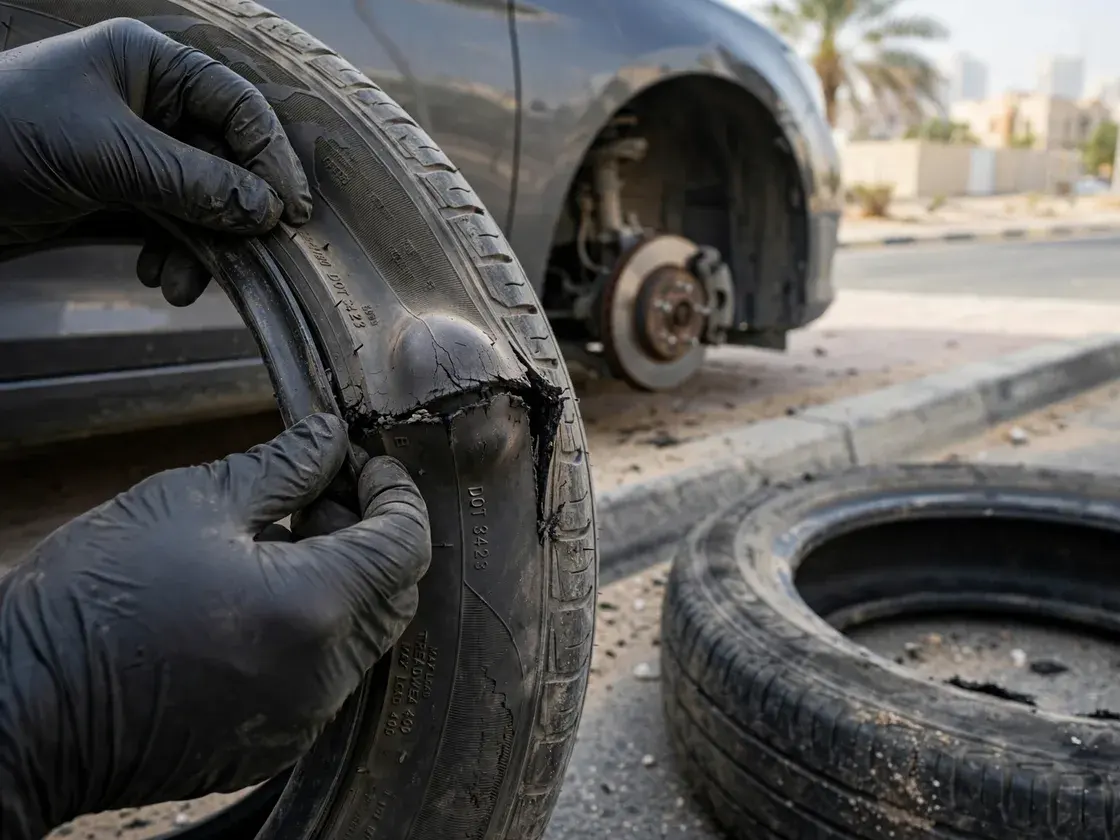
The flat rides home in your boot, and whether it goes back on depends on the damage. A small hole in the central tread can often be repaired; a cut or bulge in the sidewall means a new tyre. Michelin warns that even a short distance driven completely flat can harm the casing in ways invisible from outside.

Age matters too. Dubai's RTA says tyres more than five years past their manufacture date are not allowed on UAE roads. On the sidewall code, the last four digits give the week and then the year. Either way, sort the original tyre quickly rather than running a space saver for weeks.

Gloved hands inspecting a damaged tyre sidewall with the date code visible
Before you pull away

Quick Checks Once the Spare Is Fitted

UAE police say driving on unfit tyres can bring an AED 500 fine, four black points and seven days of impoundment.

  • Spare inflated to the pressure on the door placard or its own label
  • You know the speed limit printed on a space saver or run-flat
  • Wheel nuts rechecked after a short drive
  • Damaged wheel, jack and tools stowed so nothing slides around
  • A plan to repair or replace the original tyre this week
FAQs

Flat Tyre Replacement: Common Questions

  • The AA notes most space savers are limited to 50 mph (about 80 km/h), and TyreSafe advises against covering more than about 50 miles on one. Follow the label on the wheel and head straight for a tyre fitter.

Flat tyre and nowhere safe to change it?

Send your location and a technician will come out with the tools to fit your spare, whatever the time.